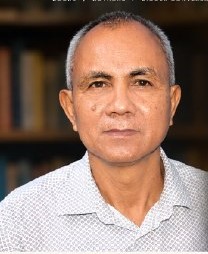
Dadhiram Basumatary is a writer and researcher committed to food justice, human rights and sustainable development. His book The Hunger Paradox: Enough Food for All, Yet Not Enough Justice opens the five-book series Starving in Plenty. We spoke with him about the contradiction at the heart of the book.
Editor’s note: Answers are drawn from the author’s own published statements about the book, lightly edited for length and clarity.
The NorthstarYour book begins with a striking contradiction. What is it?
DB:The world produces enough food to feed ten billion people, yet some 733 million people go hungry. This is not a supply crisis. It is a justice crisis. If that sentence makes you uncomfortable, this book was written for you.
The NorthstarWhere did the research take you?
DB:I spent years with smallholder farmers in Nigeria, tribal communities in Odisha and urban food deserts in Dhaka, trying to answer one question: why, in an age of abundance, does hunger still exist?
The NorthstarAnd what was the answer?
DB:It is not drought, overpopulation or poor yields. It is a global food system shaped by trade agreements, land grabs, commodity speculation and bureaucratic indifference. That system keeps food profitable while keeping justice out of reach.
The NorthstarWhich examples should readers pay closest attention to?
DB:One third of all food produced is wasted every year, enough to feed every hungry person on earth twice over. Brazil cut food insecurity by more than half in a single decade, so we know it can be done. Women grow 60 to 80 percent of the food in sub-Saharan Africa yet own less than 20 percent of the farmland. And climate change hits hardest the people who contributed least to it.
The NorthstarIf readers take one idea away, what should it be?
DB:That this is not a book about hunger. It is a book about power. The world’s most solvable problem stays unsolved for reasons we rarely hear.
The Hunger Paradox is available now on Amazon.